Be yourself; Everyone else is already taken.
— Oscar Wilde.
This is the first post on my new blog. I’m just getting this new blog going, so stay tuned for more. Subscribe below to get notified when I post new updates.
Be yourself; Everyone else is already taken.
— Oscar Wilde.
This is the first post on my new blog. I’m just getting this new blog going, so stay tuned for more. Subscribe below to get notified when I post new updates.
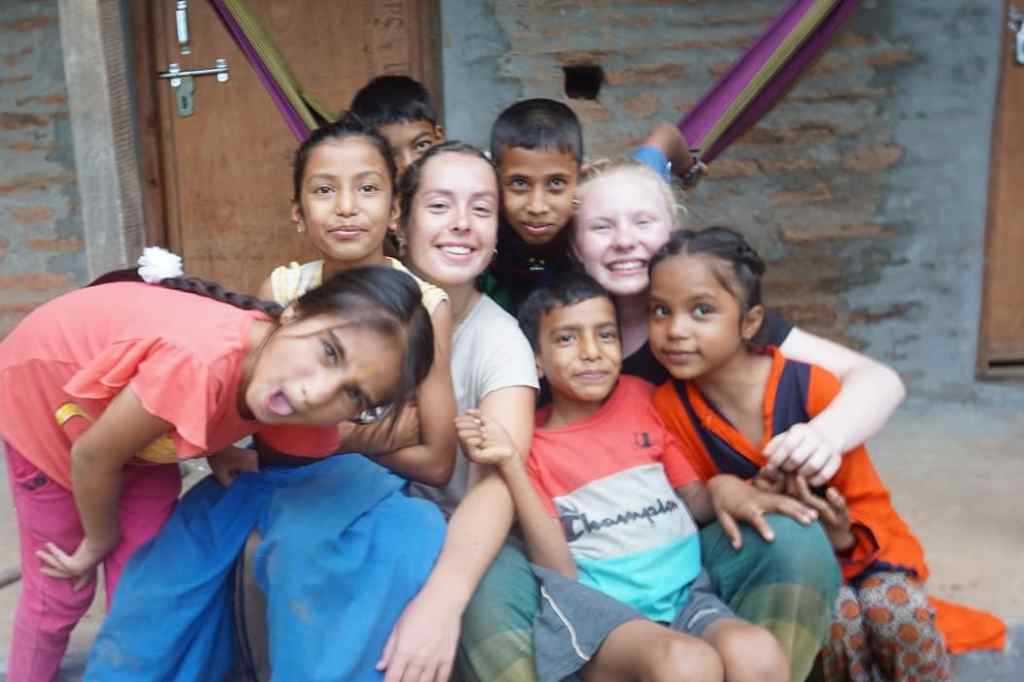
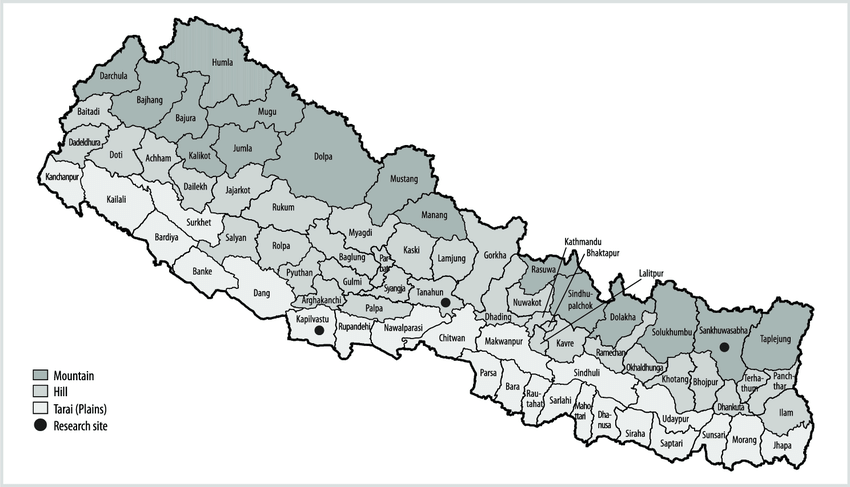
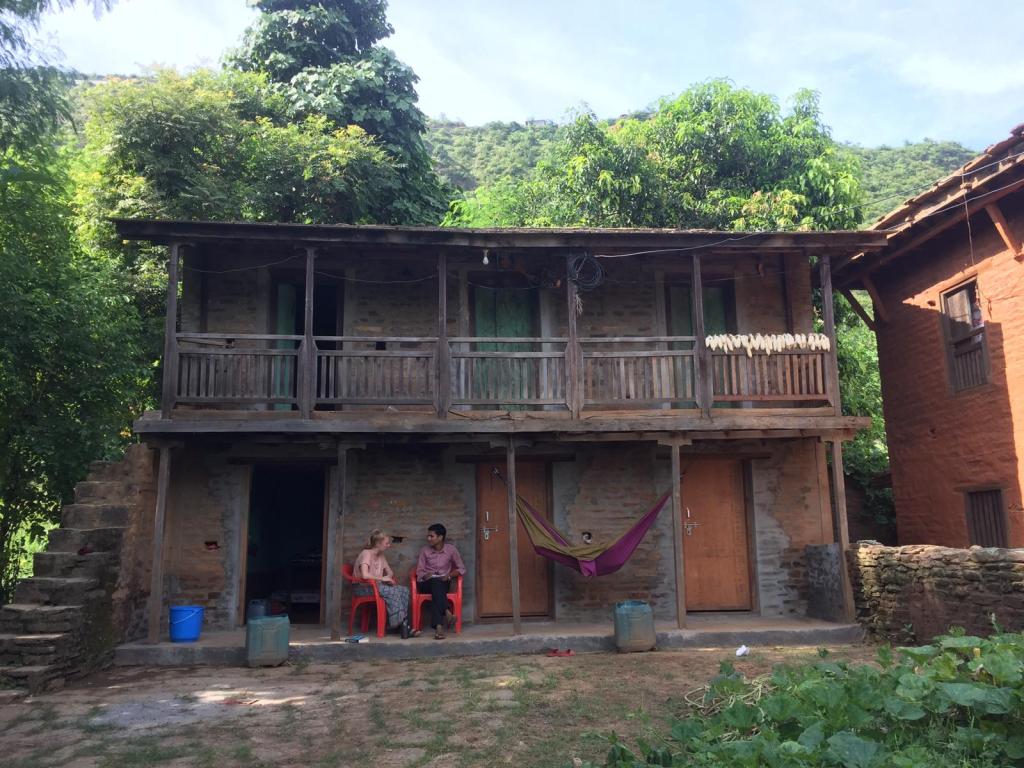
Izzy my project partner here, and I have settled well in to our new home “Kudu”, this is in the district of Jarjakot which is in the far west of Nepal. It has taken a while to adjust to a very different lifestyle and explore the area.
HOME LIFE
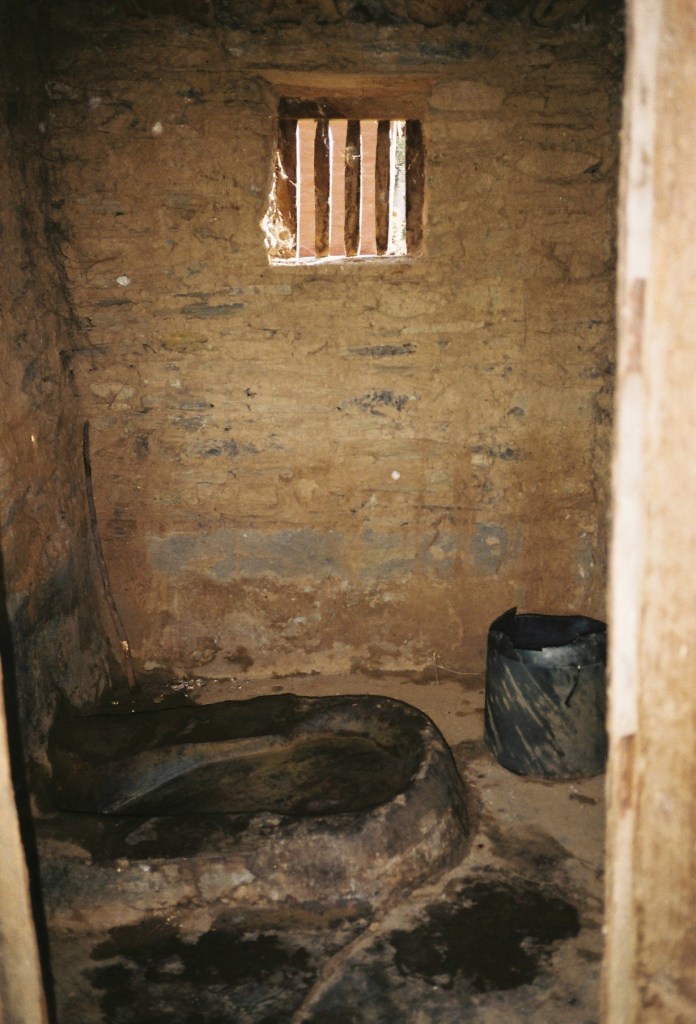
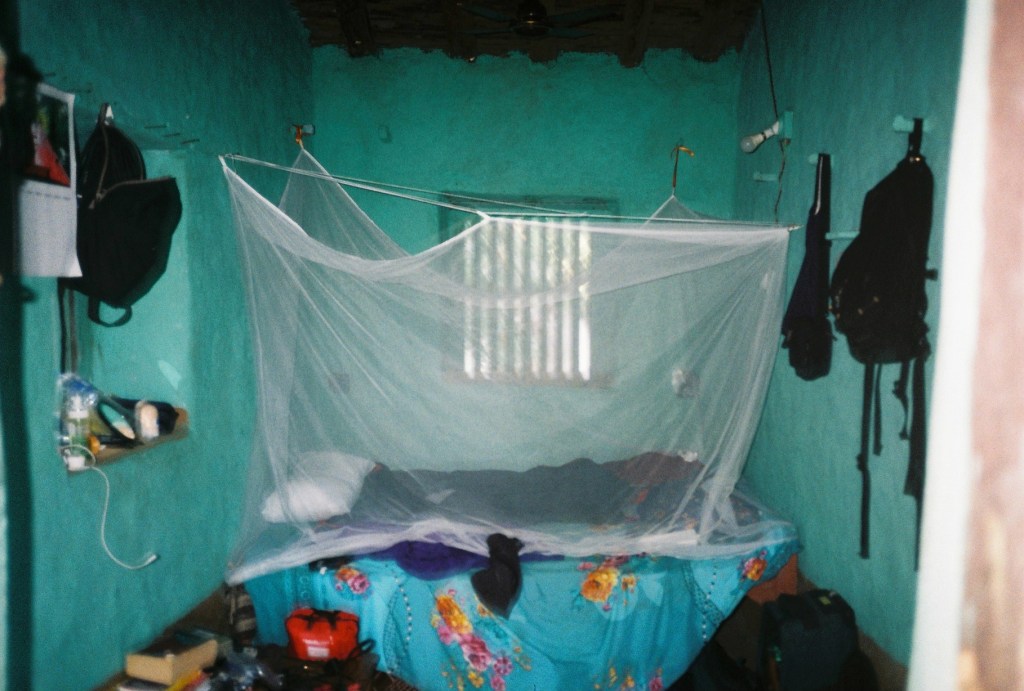
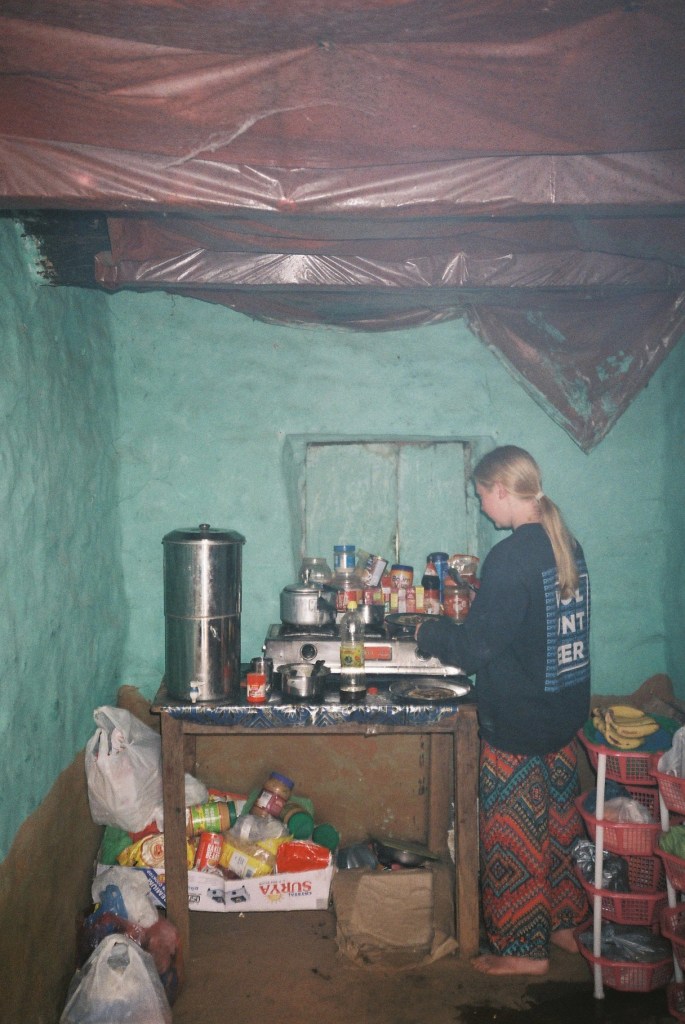
We are living in a mud house and have only one bed which we share, comprised of two planks of wood. We have our own small kitchen in another room below us. We only have electricity sometimes, as it comes on at 7 in the evening…I strongly emphasising the ‘sometimes’ in this as most of our dinners are creations from limited light and food resources.
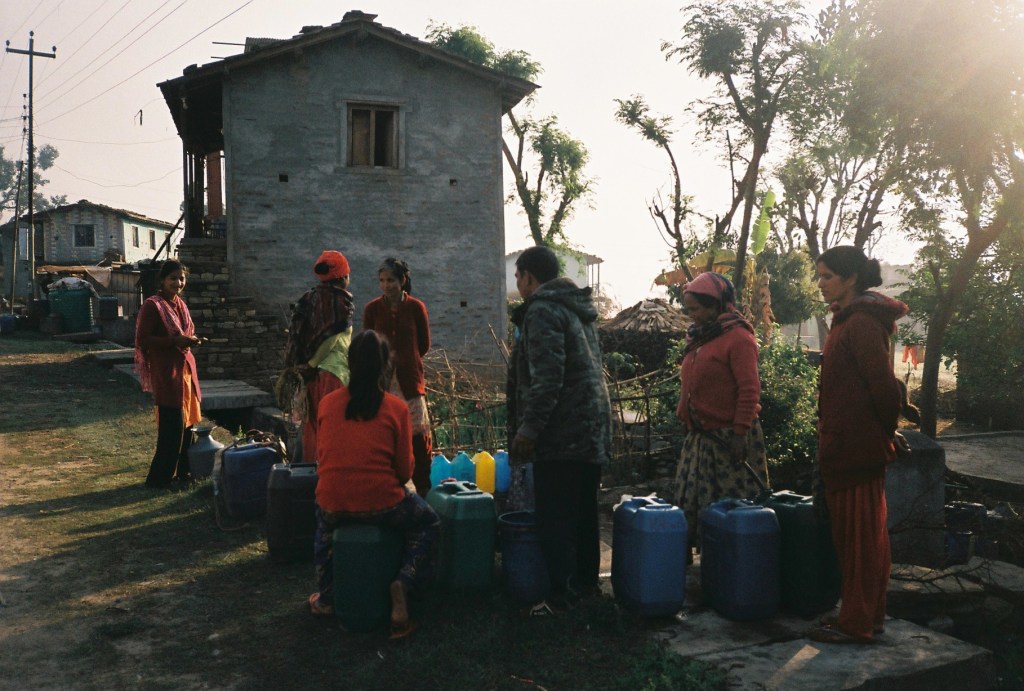
There is also no running water. We go to collect our water every morning and evening at around 7am and 7pm, from a standpipe at the far end of the village. It sounds hard, and actually I really enjoy the water run. It only becomes challenging when either Izzy or I are ill, or we don’t have enough water to wash our cooking pots and plates in order to eat again! To collect water, we walk to the standpipe and stop for a tea on the way. It’s a small shop that serves local tea (“Chiyaa” in Nepali) and they have come to know us both well! Its 10p per cup and quite possibly the nicest tea I have had, making this trip very bearable.
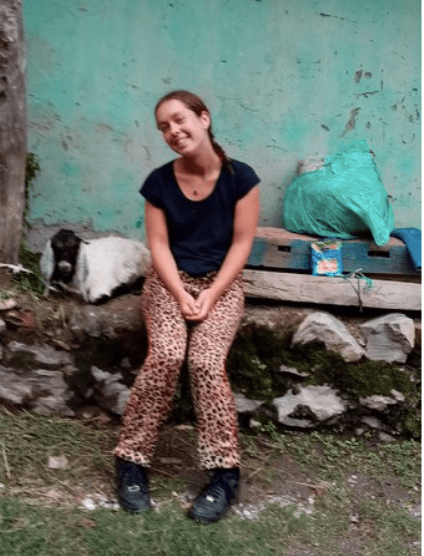
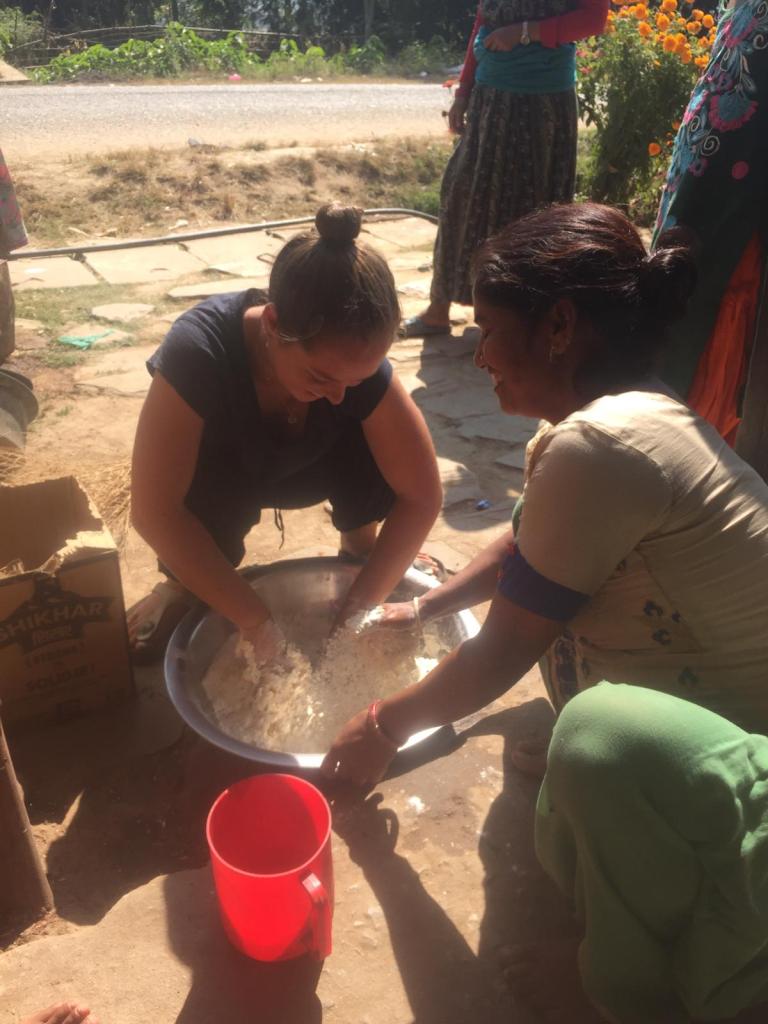
Having no running water where we live also means we use the river to wash ourselves and our clothes. This is one of my favourite parts of the living out here. We wake up early to catch the sunrise over the water despite it being ice cold. Washing our clothes in this area also allows us to integrate and join in with the community for this task. Saturdays are wash days here and also the only day off during the week, so it is always nice to spend the day down at the river with friends and close families.
A great thing about our location is that we have countless walks and surrounding villages to explore. School finishes around 3pm everyday giving us a few more hours of sun to use to our advantage. If we aren’t being kidnapped by our own students, we get a chance to read on the river bank which is very peaceful and the perfect place to unwind from the school day. That being said, you are never alone for too long here and your friends will always find you to keep you company (which is really appreciated!)
THE SCHOOL
The school I teach at is called Babwati Secondary School, and consists of classes from reception to class 10. There are around 300 pupils altogether. We started teaching almost immediately after we arrived, on our second day. I give four lessons a day, each one for 45 minutes. The classes vary hugely. Class 2’s (age 6-7 years) are all sitting on the floor as they have no desks or chairs at all.
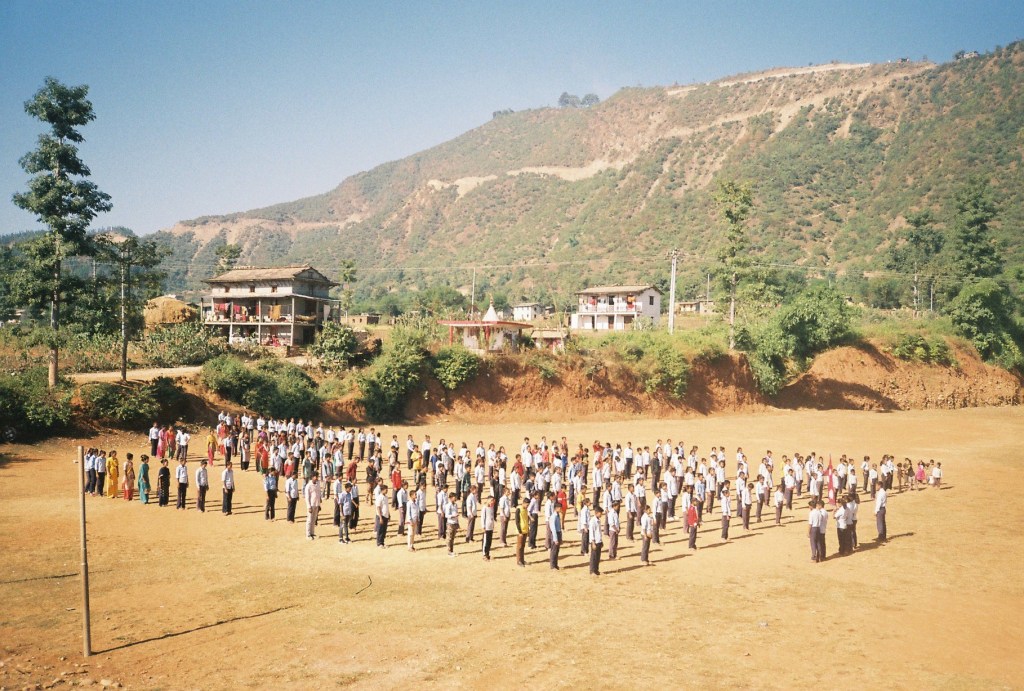
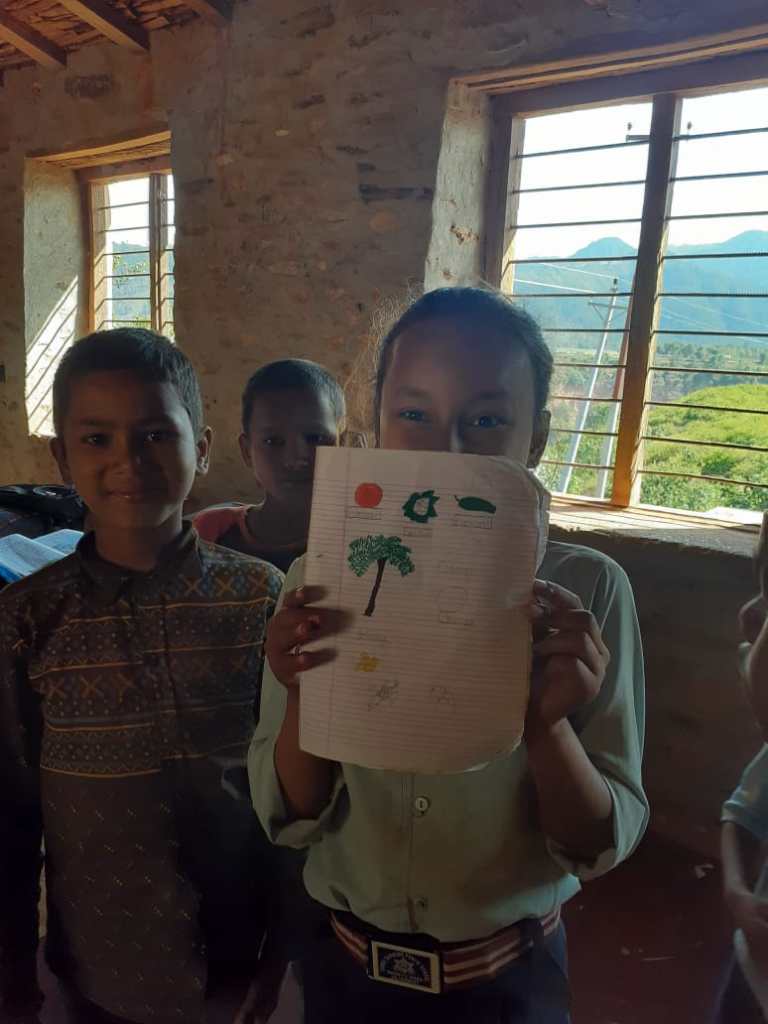
Class 9 and 10’s (15-16 yrs) have 70 students compacted in to one classroom! All classes require very different styles of teaching which didn’t take us too long to work out, and I’m enjoying learning more about how to teach here, especially using the limited resources. We teach many of the smaller classes outside in the sun which I absolutely love doing! At first, the language barrier made it difficult with explanations in lessons, but overtime both Izzy and I have learnt how to communicate using our broken Nepali, drawings, and other various interpretations of tasks which allows kids to understand what we mean. Younger students require more interactive tasks which include pictures and games, whilst the older groups enjoy working toward end of lesson rewards – hangman is a favourite!
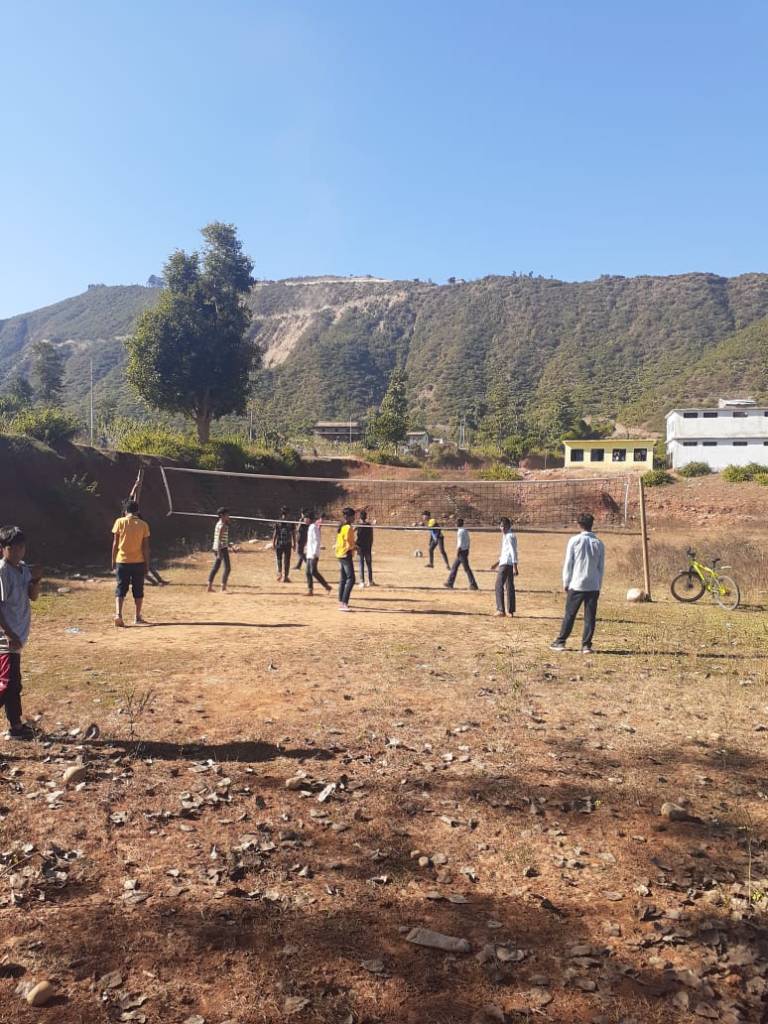
Apart from teaching English, we get involved teaching lunchtime football and volleyball games. Both Izzy and I are dreadful at both but everyone enjoys it, and everyone falls about laughing at us both trying!
The climate is also extremely different, it is 35 degrees here. Luckily we have got a huge river running alongside our village and there is a great swimming spot. We have discovered a small, secluded cove just a 15 minute walk down from our home which has been quite a find for swimming and reading. There are two boys, also teaching on Project trust in a village about an hour away in Kaleguan. We meet up with them some weekends to go walking, swimming and sharing our jokes over our different experiences. It is always intriguing for our community showing them our friends, also from the UK, and it is a great laugh to get everyone together.
Traditional greetings from our community meant we were invited around for many dinners at different locals houses. Of course the traditional dish is dhal baat (rice, a dhal soup and a vegetable curry mix) so we only ate one thing every time, but it allowed us to meet more of our community enough without properly conversing in real conversation. Izzy and I are hoping to improve our Nepali, we can only apologise to our community how painfully awful we sound at the moment!
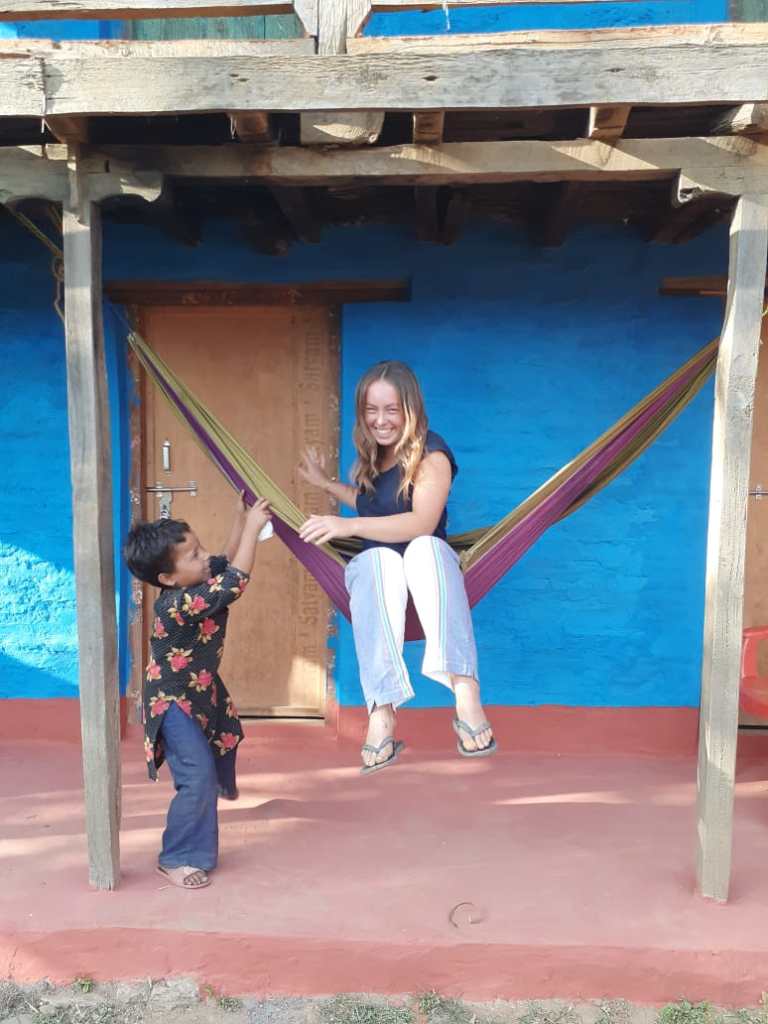
I set up a hammock in our garden, which has been used almost everyday by our young neighbors who refuse to believe that more than 5 people in it at once could possibly break it! This means we always have some kind of company at our house which is nice, since we have no host family unlike the other volunteers here. This independence has taught us how to cook, how to not cook, and overall how to live in this very contrasting environment although we look forward to being able to properly make a dhal bhat very soon!
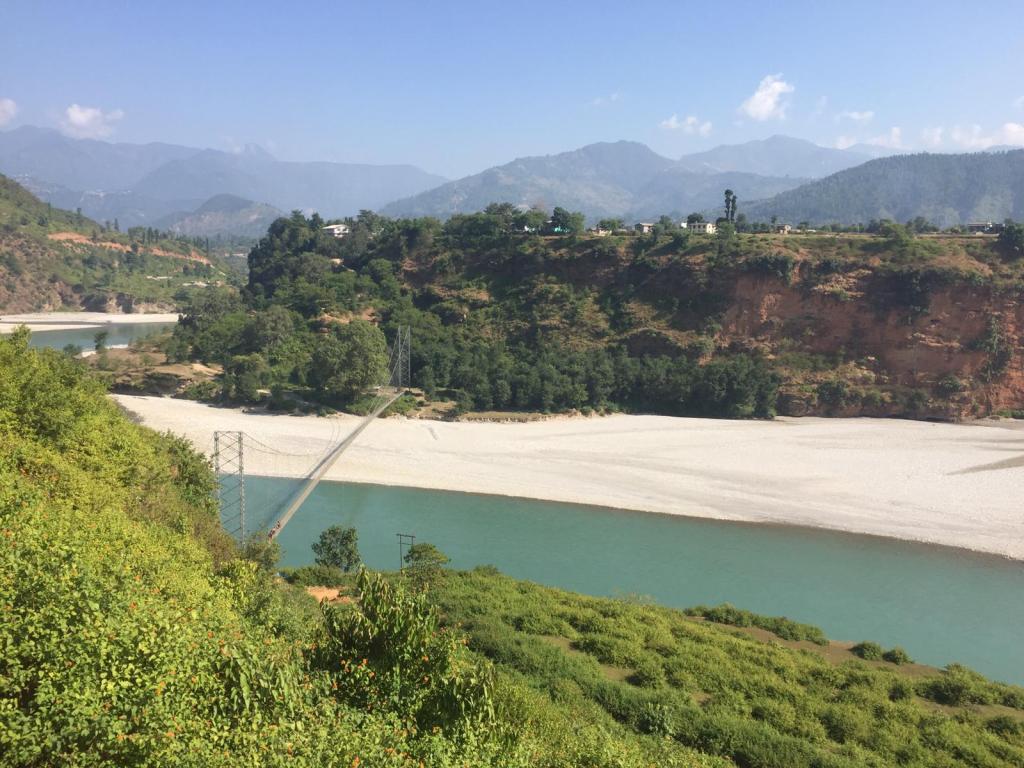
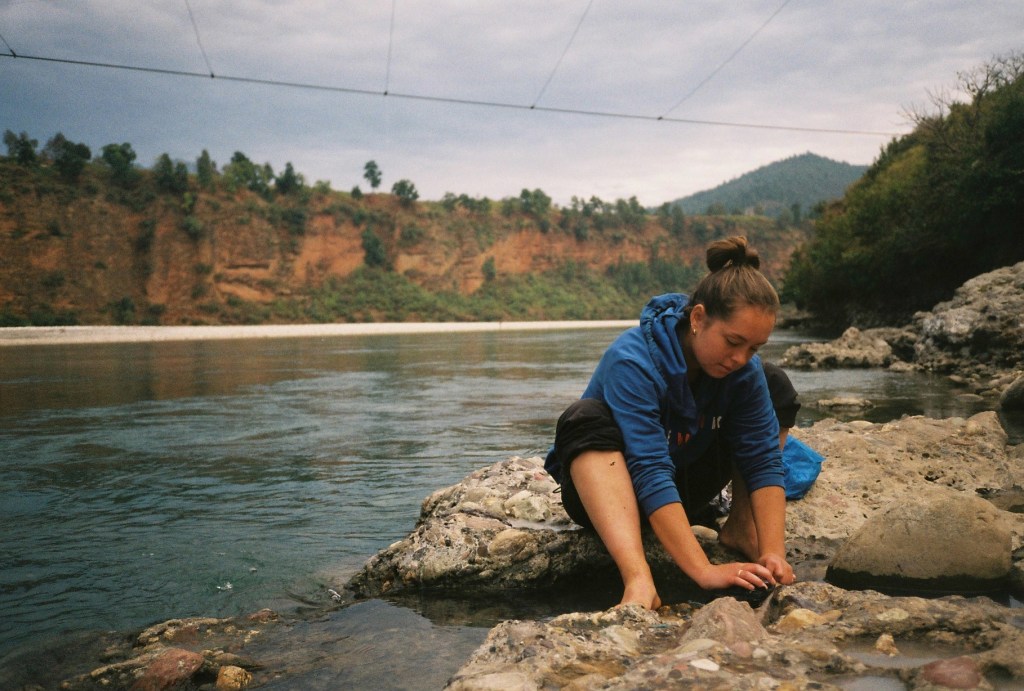
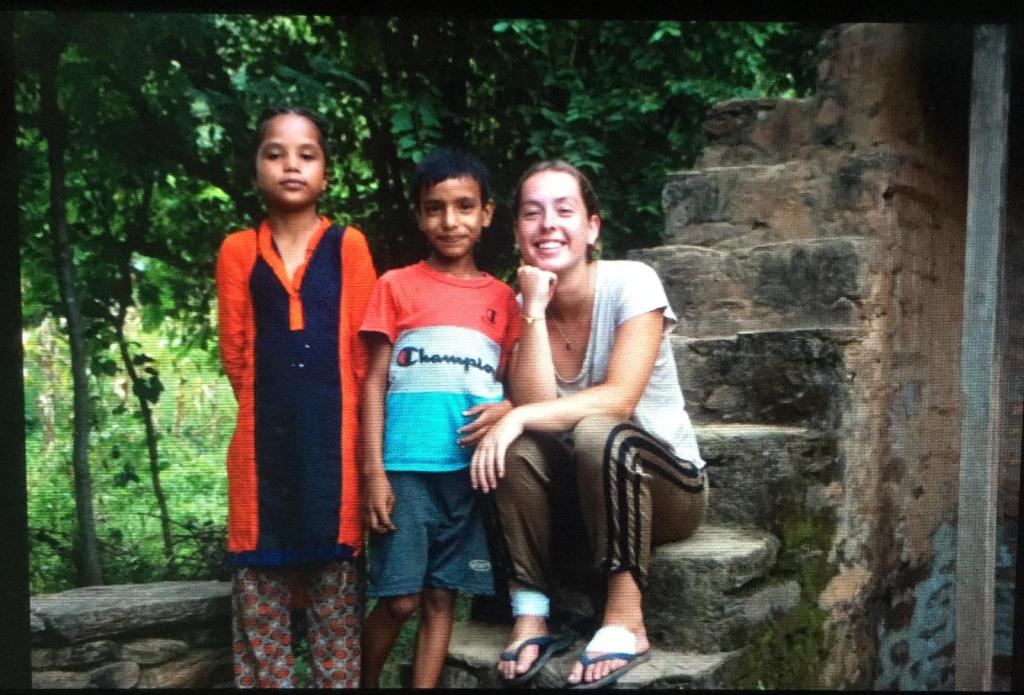
Home…
The Holidays
Our first holiday here in Nepal started at the beginning of October, perfect timing for the trekking season. We set off to Pokhara from our project, taking 2 busses and 2 jeeps overnight, taking a total of 22 hours to arrive. Nepali transport is famous for its timing, and here we have learnt to add on an extra 2-3 hours to what we are initially told. Izzy and I love journeys like these as they have given rise to many spontaneous dhal bat stops with locals and bus conversations as to why we are in very rural areas of the country. However as nice as 22 hours traveling on a bus is, we were very happy to arrive to Pokhara’s warm showers and more varied food. The Project Trust group all gathered here and we spent a few days eating western food, swimming in Phewa lake and exploring the old city of Pokhara before leaving for the Annapurna Circuit Trek.
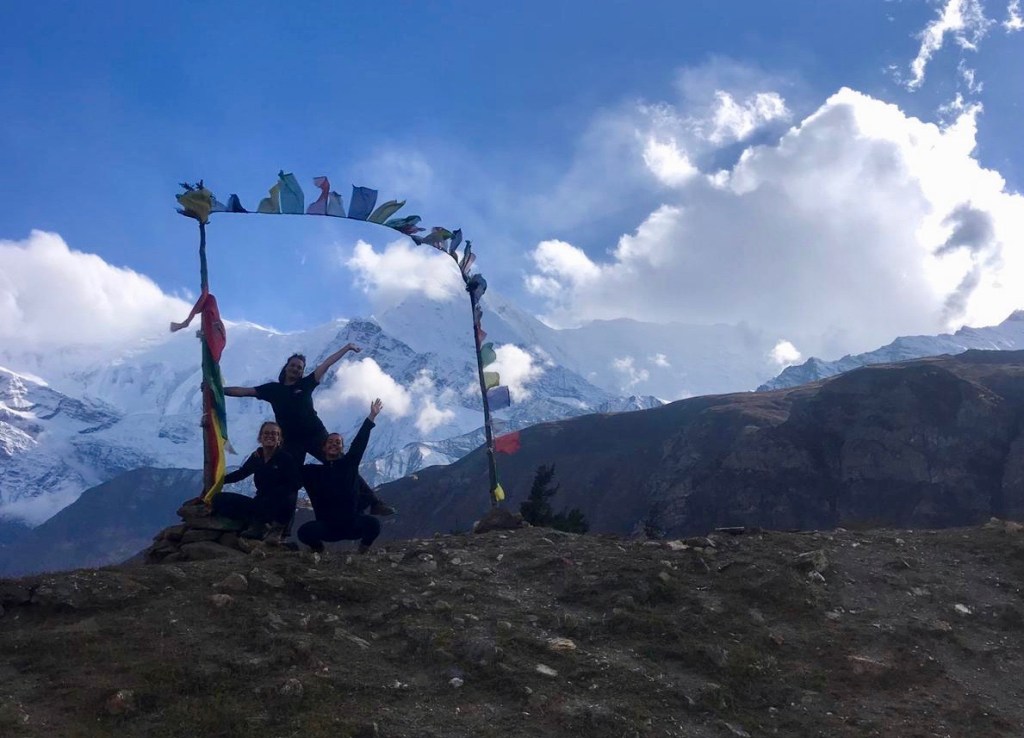
The trek started off in Darapani at around 2000 meters. Our meals on the trek consisted mainly of dhal bat and porridge with as many trekking granola bars and small peanut butter pots to share to energize us throughout. The scenery has to be the most beautiful landscape I have ever seen which also made me forget the multiple blisters that had formed on my feet. We took a rest day on day 4 in a village called Manang, this was definitely needed as I had been quite ill from the altitude (only at 3000 meters) but it was also a sweet place to explore, including a cinema and various aclimatisation walks with natural ice lakes.
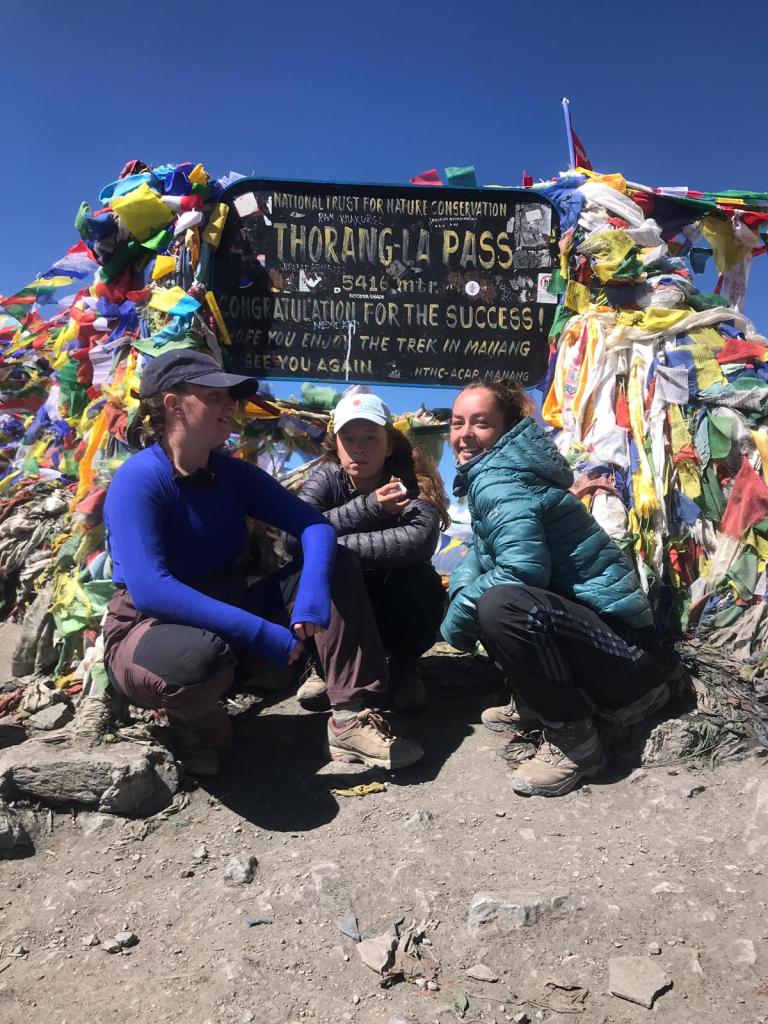
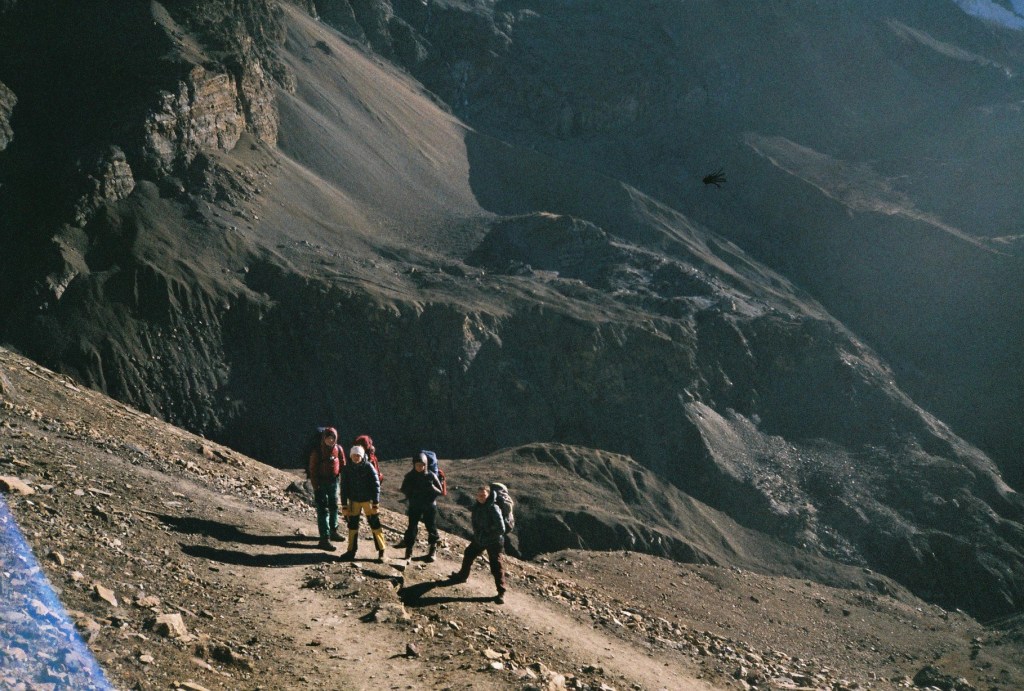
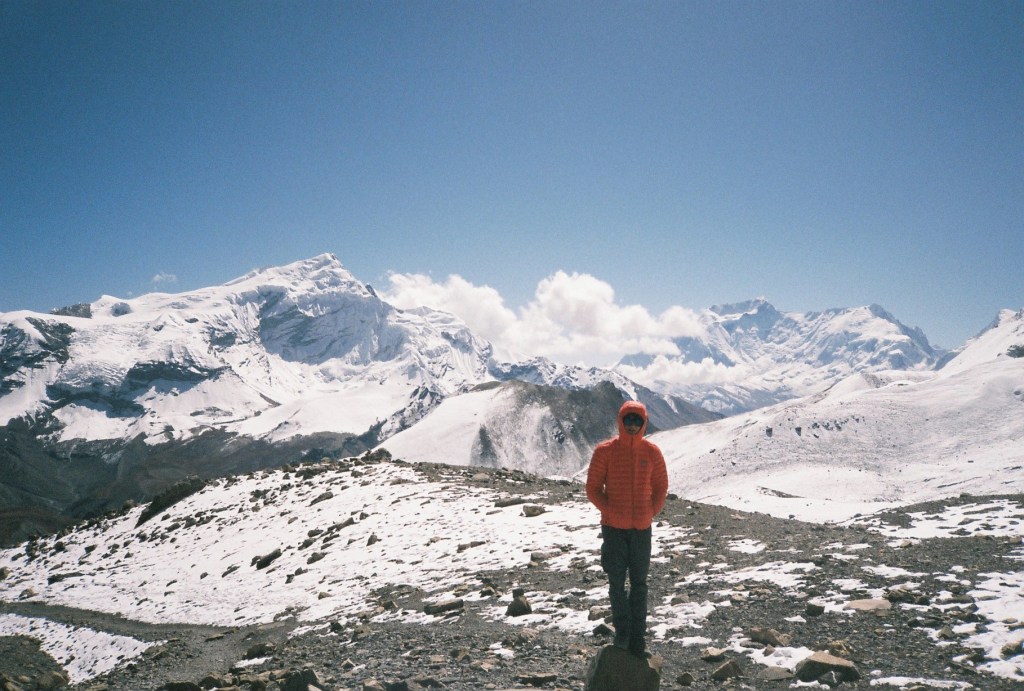
From there it was a 2500 meter ascent over 3 more days to reach the pass where the air was so thin that we needed necessary breaks every 15 minutes of walking. This was also to admire the snow capped mountains surrounding us. Our trekking ended after 16 days at a village called Tatopani, literally meaning hot water. Here we endulged in the hot springs which amazingly made my feet forgive me! It was a great end to a very challenging but rewarding trek.
We spend a few last days in Pokahra as a big group, relaxing, exploring and getting massages before heading back to our projects.
Tihar Festival
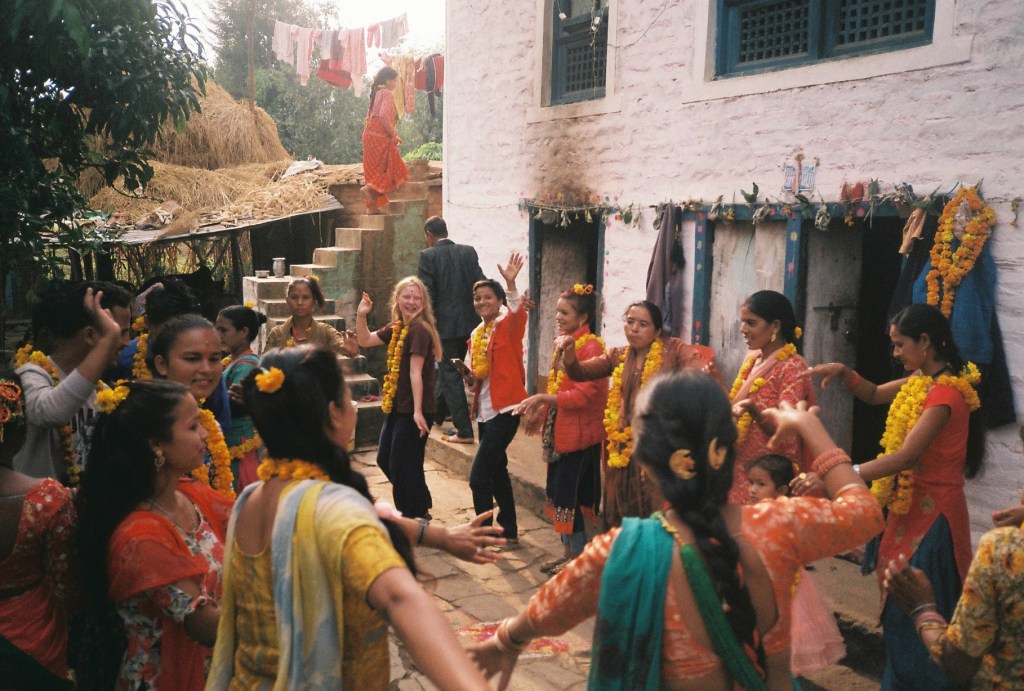
School didn’t start until a week later but we wanted to return to our villages in time for Tihar, a national festival celebrating the relationship between brother and sister. 3 days consisted of non stop dancing down the street running through our village, tikka and marigold flowers were worn on everybody and music was thumping in every corner of our now very busy village. The tradition goes, that you perform the same dance, circling round the entire village, visiting everyones home. In this dance, everyone gathers in a circle and chants, halfway through, a small handful of people enter the centre and do a separate dance together. Once you get to the last house rice tikka is thrown in the air. After 6 non stop hours of dancing, we decided to call it a day, where we returned to our house for dinner.
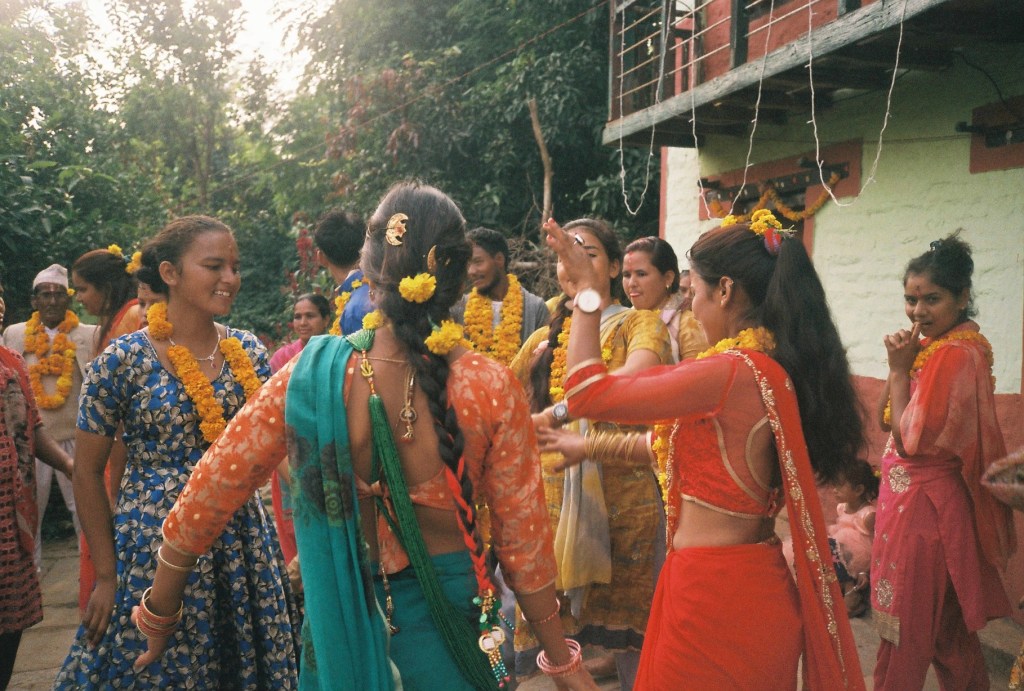
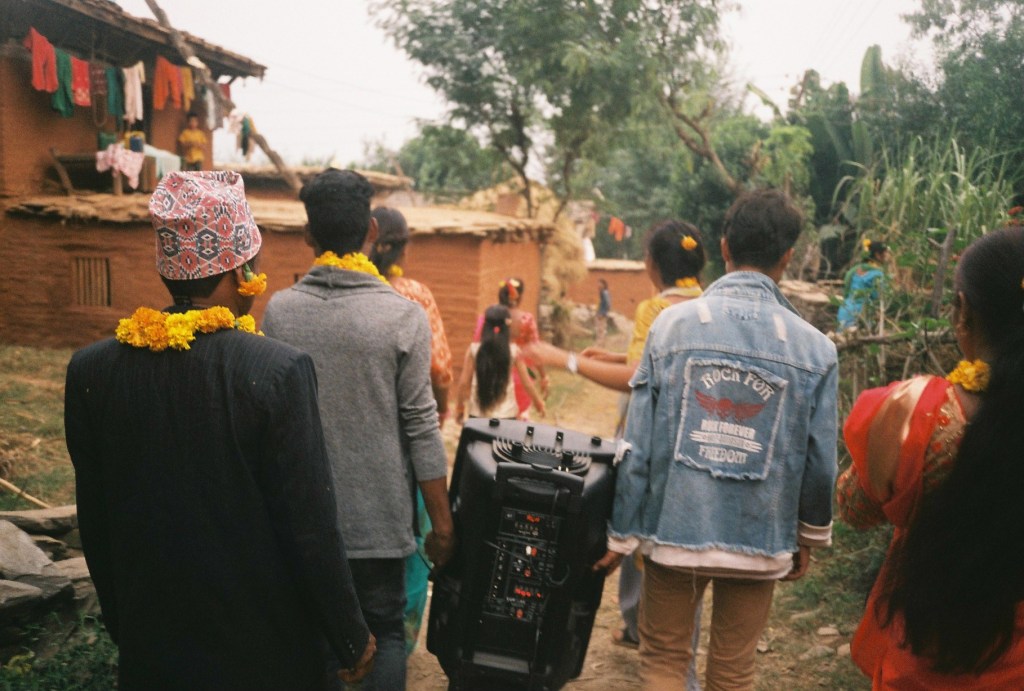
The whole experience was amazing to be a part of and we were able to watch our students perform traditional dancing that was very impressive! We are definitely looking forward to celebrating the next festival here.
Wild camping!
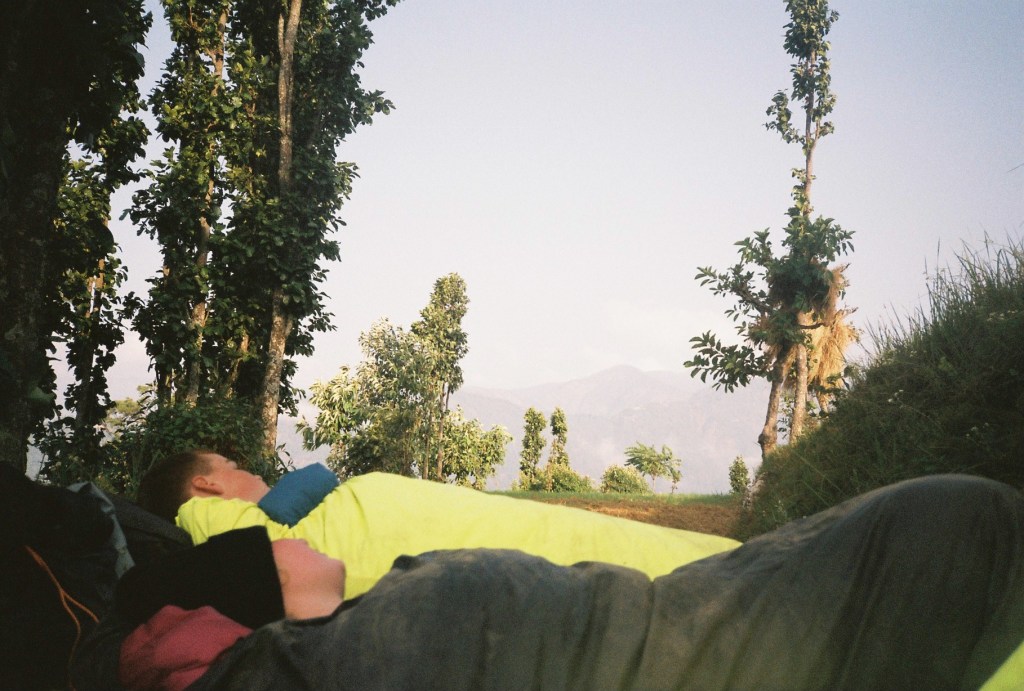
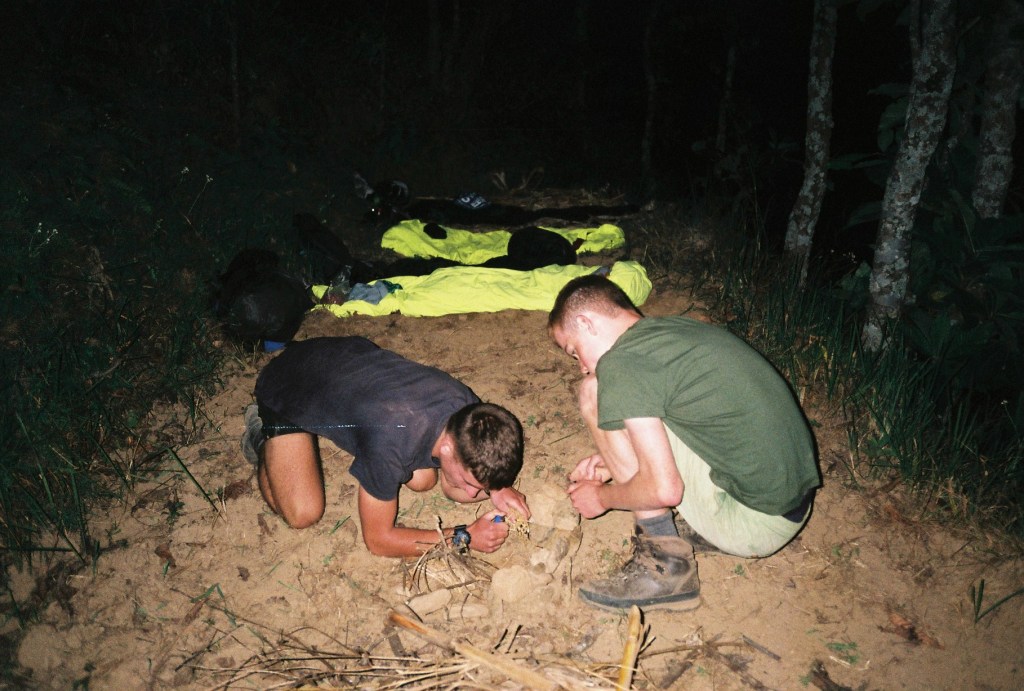
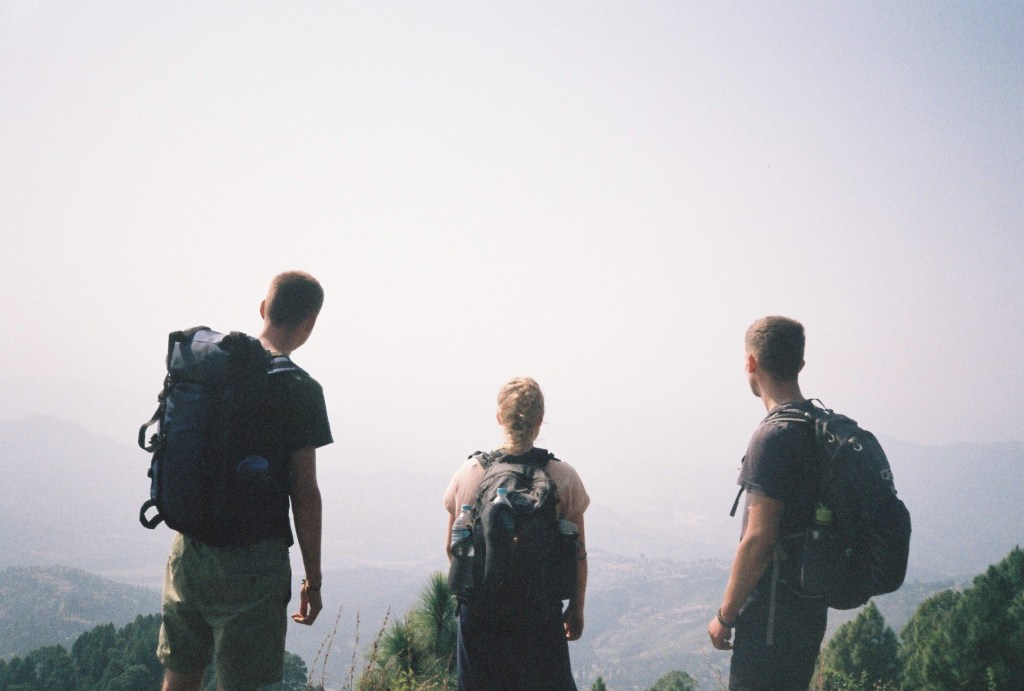
After those amazing few days celebrating, we still had 4 days before school started again. We decided to go wild camping in Tom and Fin’s project, down in Kalegaun. Kalegaun is surrounded by huge hills towering in a valley shape which made it the perfect location. We started our hike midday, assuming the walk wasn’t too long, however as light started to fade we realised we wouldn’t make it right to the top that day. We picked out a nice spot to set out our sleeping bags, with a great view over the Bheri river and surrounding villages. With the help of some men passing us by in great confusion, we managed to start a fire in which we roasted some pre made roti dough to have as our dinner. We camped out under a very starry and beautiful sky, and we were woken up to the 6am sunrise coming over the mountains. It was an amazing night and one I definitely won’t ever be forgetting. After packing up our sleeping things, we continued our trek to the top of the hill (2500 meters up). As we were passing through a small village we were stopped and offered fresh roti and buffalo milk to eat. After efforts of saying no thanks, the villagers insisted they fed us which was a delight since our dinner roti hadn’t been a success and we didn’t actually have any other food with us. A huge crowd of around 40 villagers stared and watched us eat in a large circle, they had remarked that we were the first foreign people they had seen and looking back on it now it is easy to see why they were so confused at the sight of us. After breakfast there was only a small climb left until we had reached the top, a few kids had actually followed us up from the village which was nice, even if they did hide whenever we turned around to see them. Once the top had been reached, we admired the extensive views around us and used Toms small sickle (knife) to hack open 2 coconuts we had brought as a small celebratory token for reaching the top. We admired the amazing view of our district surrounding us, being able to see both our projects and our local capital on top of the hill. We started our journey downwards in order to make it home before we lost the light.
Back To Home Life…
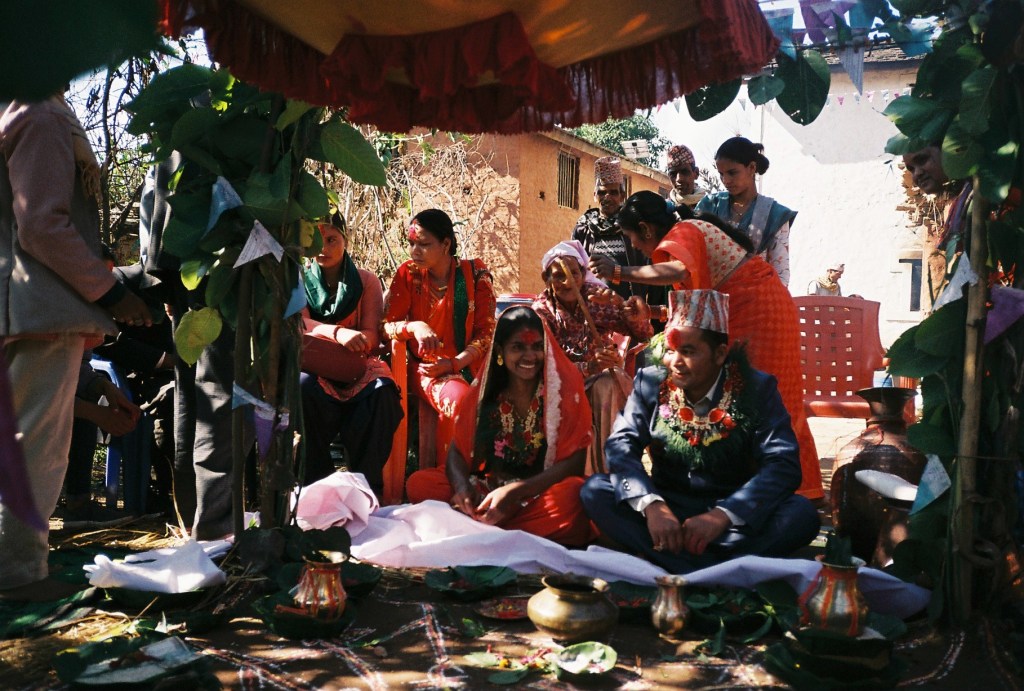
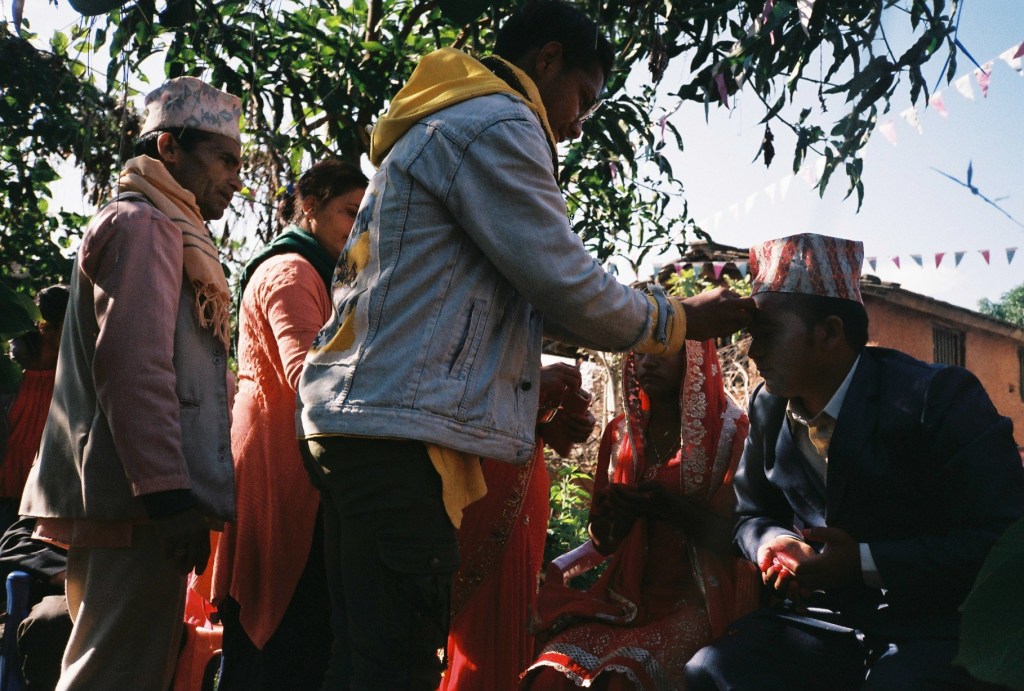
After this camping trip, Izzy and I were invited to our first Nepali wedding. We had heard quite a lot about this wedding throughout the week from friends in our village. They were excited at the prospect that we hadn’t been to a Nepali wedding before and made sure we weren’t going to miss it. The wedding was a friends older brother who was having an arranged marriage. Upon arrival we were offered food which was being handed out in large bowls made up of leaves sew together. The meal consisted of rice, goat, sag and dhal. It was a delicacy to have goat, and we came to find out that one goat is sacrificed and eaten at every wedding. There was a parade of drums in the street to make way for the bride and groom, as villagers followed them on the march to the grooms house. Another thing upon arrival, is being gifted with tikka, it is given 3 times onto the forehead and it is expected to be given back. People also donate money, however much, towards the wedding. This is to help fund the food being provided and as a gift offering towards the married couples families. The groom and bride are dressed up in very fancy clothing, she wears jewels, beads, and gold necklaces and bracelets along with a beautiful jewelled red Sari. Whilst he wears a smart suit with a traditional but fancy mens Nepali hat, Both are wearing lots of Tikka. This is when the woman starts wearing fluorescent orange tikka at the top of her forehead to symbolise her marriage. Here the day is finished off with the ceremony, and lots and lots of dancing and I enjoyed it so much!
Christmas!
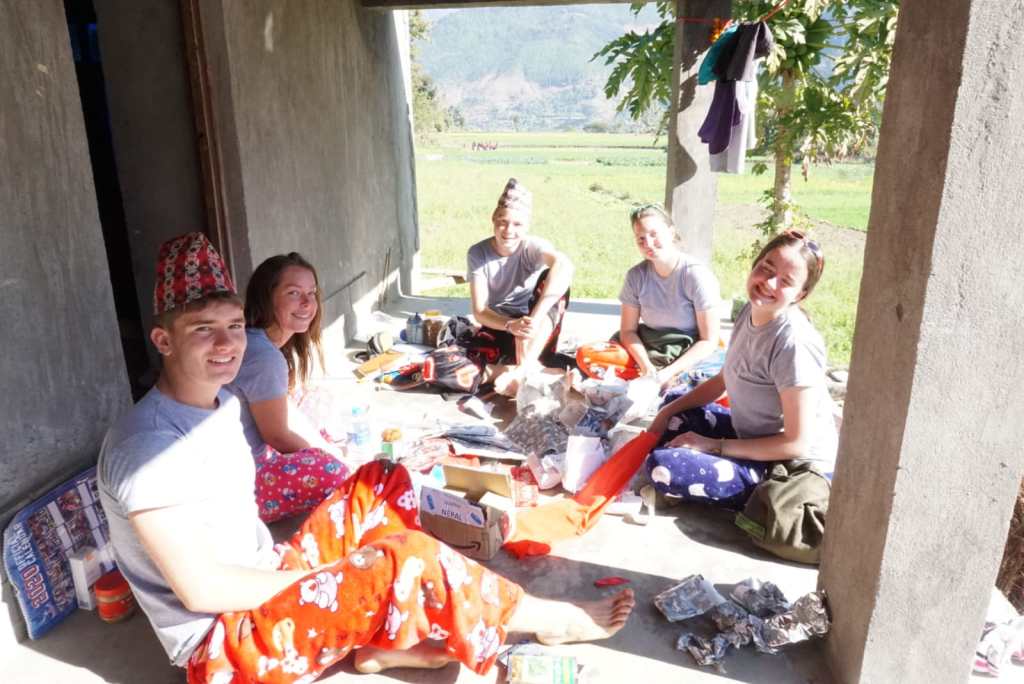
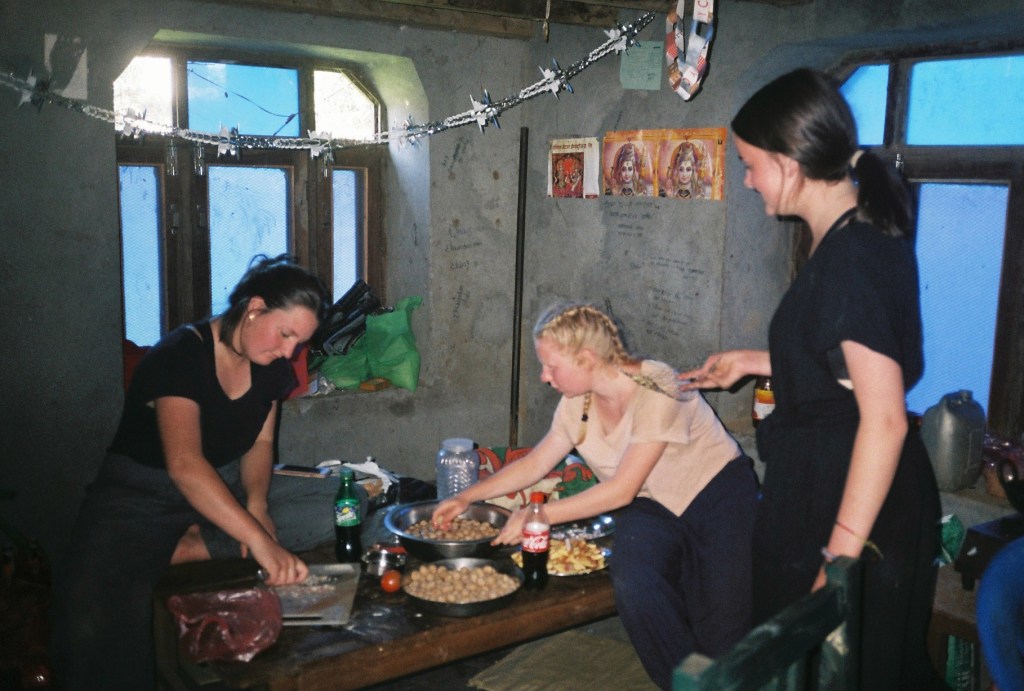
Christmas came shortly after a return to teaching from the October holidays. We had arranged to spend in in Kaleguan, with the Rukum girls Cat and Sophie. We started of Christmas Day with a lovely Christmas walk in the sun, off to collect the chicken. We were able to pick out and have our chicken cut up before us for only 500 rupees (around £3). The rest of the day was spent preparing huge bulks of food on only one small gas cooker and a failed attempt at a fire. The sun was shining as we ate our feast on the balcony, our selection consisted of: roti, cabbage and potatoes, tofu, potato wedges, spicy tomato sauce and smoked bbq chicken. We ended the night with a few classic Christmas games of course a karaoke competition.
A journey in January
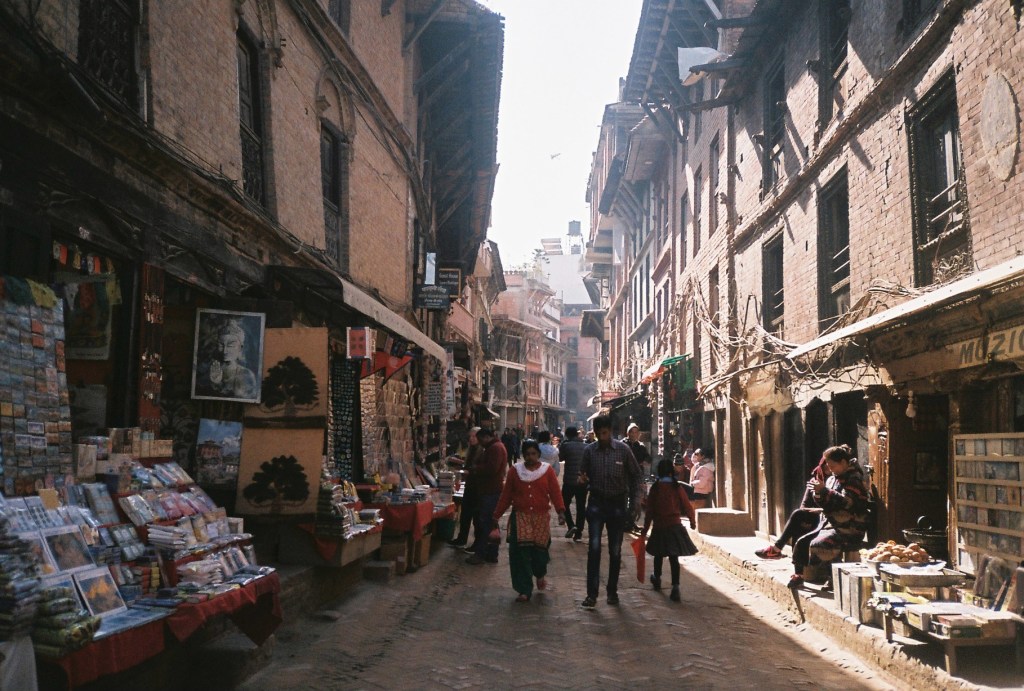
During Christmas, Babwati school had 2 weeks of mid year exams that the whole school participated in. After writing the English exams, Izzy and I were given some time off after new year as we weren’t needed for teaching. So, after Boxing Day and lovely time at the boys project, we packed up and set off on the 30 hour bus journey to Kathmandu. This journey feels like forever and nothing at the same time. It showcases amazing views and variations of the whole country and even though it lasts a lifetime, it is always fun meeting new faces on the bus, allowing us to practice Nepali and learn more about this amazing culture. Once arriving to Kathmandu it was a quick stopover, enjoying a hot shower and pizza before making our way to Baktipur. We admired the magnificent old temples, thankfully most were still standing after the 2015 earthquake despite a few. We shopped, admired weavers, potters, and ate delicious authentic food. It was a great place to appreciate the historic beauty of Nepal. Our next stop was to Kathmandu for an epic New Years celebration and explore through the streets of Thamel, trying street food and shopping, before an early New Years day bus to Chitwan national park.
Holi!
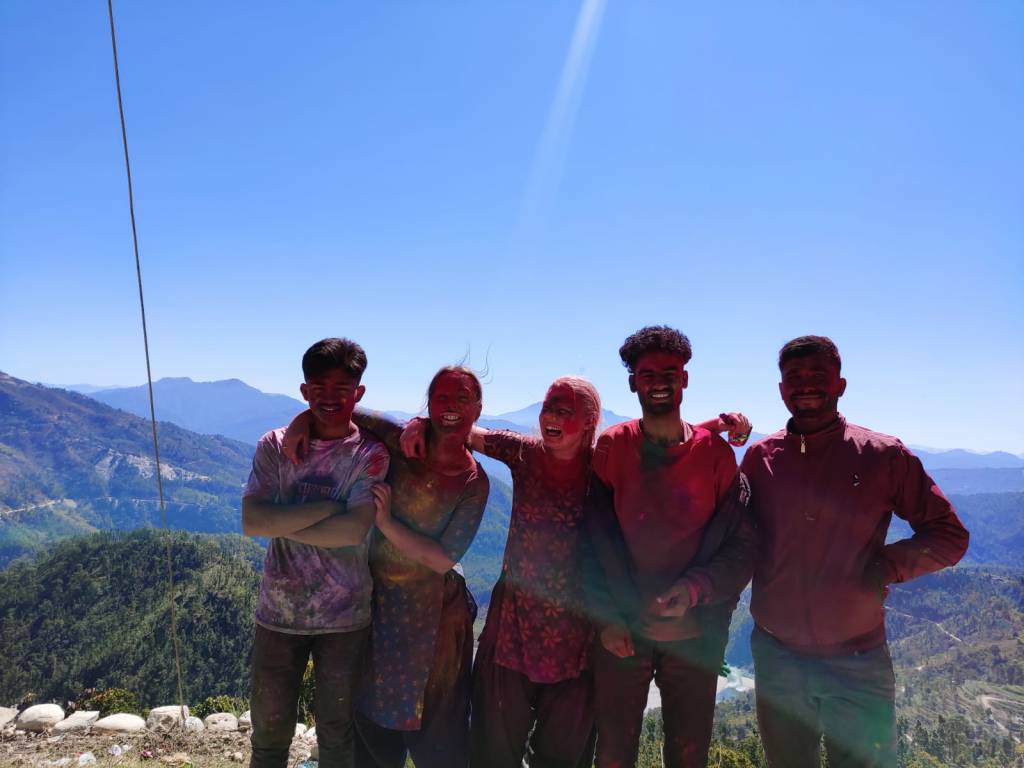
On March 11th we celebrated Holi. Holi is the celebration of the arrival of spring, and also love, colour and the triumph of good over evil. It is also an opportunity to give tikka to those you love and care about. We woke up early to a huge crowd of kids in our garden, very obviously hiding sachets of tikka behind their backs. It wasn’t long before we had to surrender and face the attack of colour, unfortunately Izzy and I were not armed at that point. A mistake I never fail to look back on. During the morning we made our way round the village, bombing anyone we could find with coloured tikka. It was nothing short of a war between us and all of our students. If there is one thing I’m sure of, there’s no pain more than having tikka thrown into your eyes whilst they’re open. And to add, Izzy and I both had an egg cracked onto our heads, not a particular tradition but just for good measure it seems. The day was finished off at the river, spending 2 hours trying to scrub off what seemed like 100 layers of paint and powder. It was a blissful end to a very hectic but exciting day. It was so great to be able to spend a day in this hindu culture doing something new. Holi is one of Nepals biggest festivals and is not taken lightly here, it is a day I will never forget and will always be one of my most magical days here in Nepal.
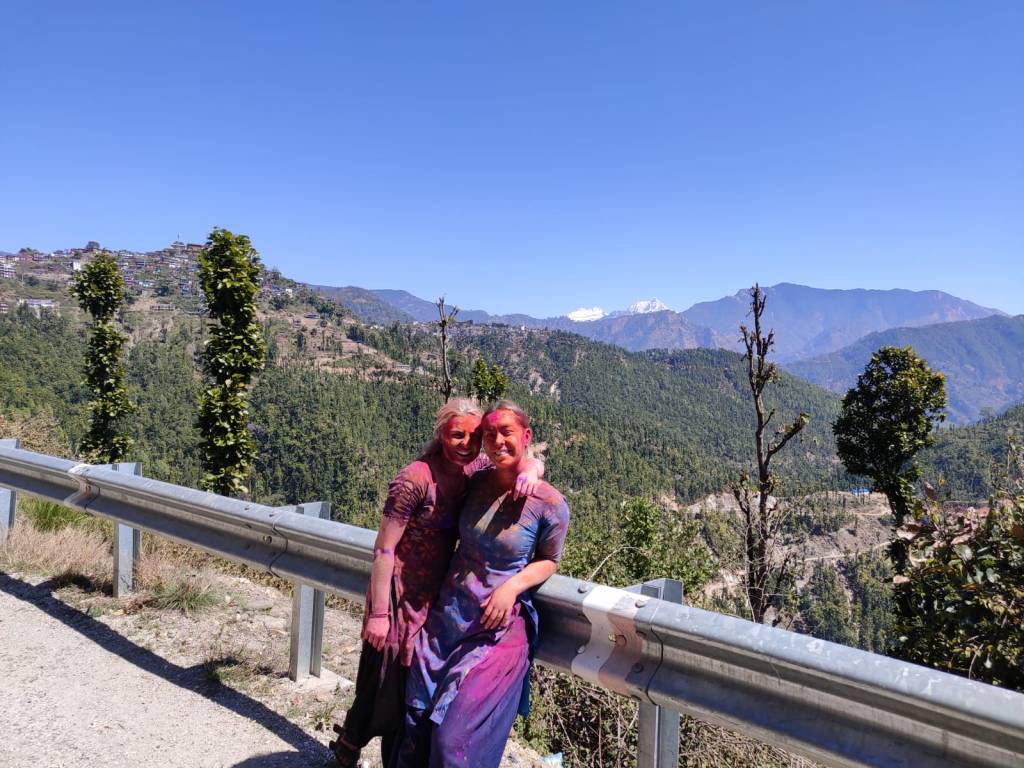
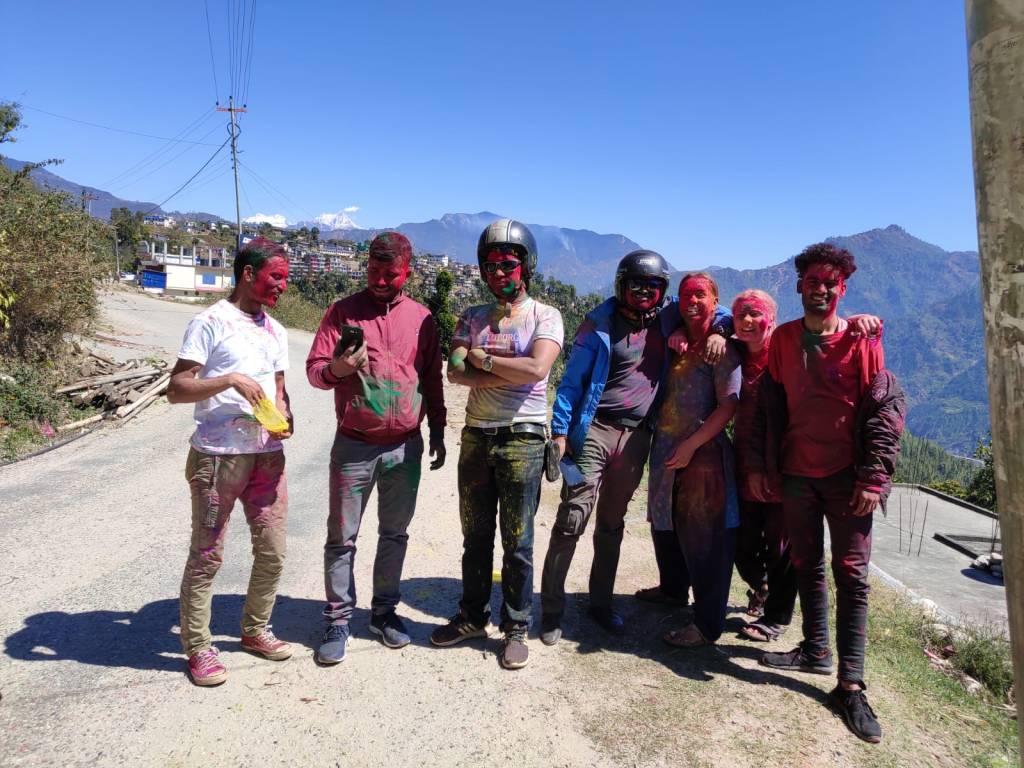
Due to the coronavirus, unfortunately we had to be repatriated back to the UK. This was something that took a while to come to terms with and definitely wasn’t easy for us. I have loved every moment in Nepal and will cherish all the moments and memories I made here. Kudu will always feel like a home to me and I hope to return as soon as I can!
This is an example post, originally published as part of Blogging University. Enroll in one of our ten programs, and start your blog right.
You’re going to publish a post today. Don’t worry about how your blog looks. Don’t worry if you haven’t given it a name yet, or you’re feeling overwhelmed. Just click the “New Post” button, and tell us why you’re here.
Why do this?
The post can be short or long, a personal intro to your life or a bloggy mission statement, a manifesto for the future or a simple outline of your the types of things you hope to publish.
To help you get started, here are a few questions:
You’re not locked into any of this; one of the wonderful things about blogs is how they constantly evolve as we learn, grow, and interact with one another — but it’s good to know where and why you started, and articulating your goals may just give you a few other post ideas.
Can’t think how to get started? Just write the first thing that pops into your head. Anne Lamott, author of a book on writing we love, says that you need to give yourself permission to write a “crappy first draft”. Anne makes a great point — just start writing, and worry about editing it later.
When you’re ready to publish, give your post three to five tags that describe your blog’s focus — writing, photography, fiction, parenting, food, cars, movies, sports, whatever. These tags will help others who care about your topics find you in the Reader. Make sure one of the tags is “zerotohero,” so other new bloggers can find you, too.

 Luca's Year in Nepal